Answered: For most shoppers, facial oils are best for adding hydration, sealing in moisture, and balancing skin tone. This guide highlights five top options that suit different needs—from pure carrier oils to multi-oil formulations—so you can pick the right one for your skin type and goals. The list targets everyday use, simple routines, and clear benefits for beginners and experienced users alike. Each product is chosen for its relevance, ingredients, and practicality in typical American skincare routines.
| Product | Best For | Why It Stands Out |
|---|---|---|
| Palmer’s Cocoa Butter Formula Moisturizing Skin Therapy Oil | Dry skin, aging concerns | Ten pure oils with cocoa butter and vitamin C help moisturize and smooth fine lines |
| Cliganic Organic Rosehip Seed Oil | Scar fading, hyperpigmentation concerns | 100% pure organic rosehip oil, single-ingredient |
| Bio-Oil Skincare Oil | Scars, uneven tone | Blend of natural oils with vitamins; non-greasy hydration |
| BYOMA Hydrating Recovery Oil | Barrier support, sensitive or reactive skin | Jojoba, seabuckthorn, squalane with barrier lipid complex |
| Good Molecules Squalane Oil | Lightweight hydration, balanced moisture | 100% olive-derived squalane, non-greasy |
Palmer’s Cocoa Butter Formula Moisturizing Skin Therapy Oil

What it is: A face oil blend featuring ten pure oils, cocoa butter, vitamin E, vitamin C, and a Cetesomate Complex for nourishment. The formula is designed to moisturize, smooth fine lines, and brighten the complexion. It’s positioned as suitable for daily facial use and versatile for other areas that need hydration.
Best for: Dry or aging skin where extra moisture and anti-aging support are desired. It is well-suited for individuals who want a multi-oil blend in one product that also helps with skin brightness and texture improvement.
Why selected: This product combines a cocoa butter base with a complex of essential vitamins and oils, offering both hydration and brightening actions. The inclusion of retinol-like components in a low-irritation formula can help with texture while avoiding heavy greasiness for many users.
Caution or limitation: Some users may be sensitive to fragrance or retinol-like components. Patch testing is recommended if you have sensitive or reactive skin. Consider using a smaller amount to gauge tolerance.
Key takeaways:
- Best for those seeking a rich, multi-oil formula in one bottle
- May be best for nighttime use or targeted dry patches
- Potential fragrance sensitivity for fragrance-adverse users
Cliganic Organic Rosehip Seed Oil for Face

What it is: A 100% pure rosehip oil (organic, cold-pressed, non-GMO) with single-ingredient purity. Rosehip oil is known for essential fatty acids and vitamins that support skin renewal and hydration with a lightweight feel.
Best for: People seeking a simple, pure carrier oil option for daily facial use, especially those focusing on scar and pigment-related concerns or who prefer minimal ingredients.
Why selected: It’s a straightforward, versatile oil that can be used alone or mixed with serums for targeted nourishment. The organic certification and single-ingredient profile simplify routine considerations for ingredient-conscious shoppers.
Caution or limitation: Pure rosehip oil can be more effective when used consistently; results vary by skin condition and frequency of use. Store in a cool, dark place to preserve freshness.
Key takeaways:
- Best for minimal ingredient routines
- Pure oil; easy to mix with other products
- May require longer-term use to notice pigment-related improvements
Bio-Oil Skincare Oil

What it is: A non-greasy blend designed to moisturize skin and support the appearance of scars, stretch marks, and uneven skin tone. It includes vitamin E, chamomile, and lavender oils for soothing effects.
Best for: Those dealing with uneven tone or scarring who want a daily-use oil that hydrates without clogging pores. It’s also appropriate for sensitive skin when used as directed.
Why selected: Bio-Oil is a widely used formulation that emphasizes hydration and complexion improvement in a non-greasy base, helping skin maintain moisture and resilience during recovery from minor skin concerns.
Caution or limitation: The product’s scent and oil texture may not suit fragrance-sensitive users who prefer fragrance-free options. For some, effect on scars may take consistent, longer-term use.
Key takeaways:
- Best for improving uneven skin tone and minor scarring
- Non-greasy formula suited for daytime use under makeup
- Fragrance considerations may apply for sensitive users
BYOMA Hydrating Recovery Oil
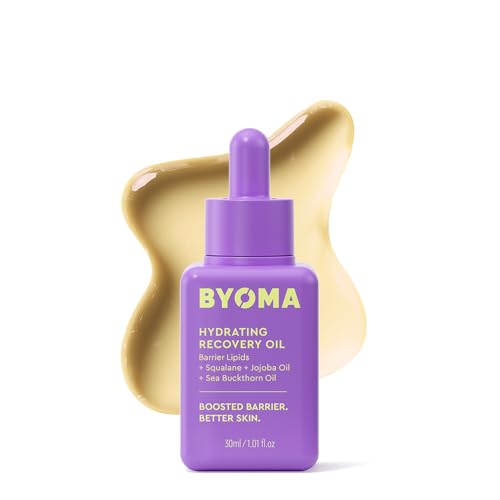
What it is: An ultra-lightweight facial oil featuring squalane, jojoba oil, seabuckthorn oil, and a Barrier Lipid Complex aimed at restoring hydration and reinforcing the skin’s protective barrier.
Best for: People with dry-to-normal skin seeking a lightweight oil that reduces water loss, supports barrier health, and minimizes visible pores. Also suitable for those with sensitive or reactive skin due to barrier-centric formulation.
Why selected: The blend emphasizes barrier repair and long-lasting hydration, aligning with BYOMA’s focus on lipid-based skincare. The combination reduces guesswork for users who want a balanced, non-greasy finish.
Caution or limitation: Some users may experience a slight residue if applied too generously, especially in very oily areas. Start with a small amount and adjust.
Key takeaways:
- Best for barrier support and light, hydrating feel
- Good option for sensitive or reactive skin when used as directed
- May require careful application to avoid heaviness on very oily skin
Good Molecules Squalane Oil

What it is: A lightweight, 100% olive-derived squalane oil designed to deliver non-greasy hydration with antioxidant benefits. It’s a simple moisture-boosting option for daily use.
Best for: All skin types, especially those who want a pure, non-greasy moisturizer that helps maintain moisture balance without a heavy finish.
Why selected: Its plant-sourced squalane provides reliable, gentle hydration and antioxidant support without adding complexity to a skincare routine. It pairs well with serums and moisturizers.
Caution or limitation: Some users with very oily skin may find even lightweight oils unnecessary. If skin already produces ample oil, testing a small amount first is prudent.
Key takeaways:
- Best for light, non-greasy hydration
- Good baseline option for a simple skincare routine
- Pure squalane’s stability makes it easy to mix with other products
Buying Guide: How To Choose The Right Facial Oil
What skin type should guide your choice?
Dry and aging skin typically benefits from richer blends with oils like cocoa butter or rosehip. Oily or acne-prone skin often prefers lighter, non-greasy options such as squalane-only formulas or small amounts of jojoba oil. If you have sensitive skin, consider fragrance-free or hypoallergenic options and patch-test any new product.
What concerns are you addressing?
To reduce fine lines and brighten skin, look for formulas with vitamins C, E, or retinol-like components in safe, balanced amounts. For scarring or uneven tone, consider rosehip or specialized blends designed for skin renewal and hydration without clogging pores.
How to apply for best results?
Apply to clean skin after serums or right before moisturizer. Use a pea-sized amount for the face and more for dry areas. Start with once daily, then adjust to morning or evening routines based on how your skin responds.
Ingredient transparency and safety
Choose products with clearly labeled ingredients and certifications if available. Organic certifications or single-ingredient oils simplify ingredient tracking and reduce exposure to potentially irritating additives.
Budget and routine considerations
Simple routines benefit from single-ingredient oils, while multi-oil blends offer convenience. Consider your skin’s needs, fragrance tolerance, and whether you prefer a fragrance-free option or a product with a broader nourishing profile.
Practical comparison at a glance
- Most nourishing: Palmer’s Cocoa Butter Formula Moisturizing Skin Therapy Oil
- Purest single-ingredient option: Cliganic Rosehip Seed Oil
- Best for scars and uneven tone: Bio-Oil
- Barrier-supporting option: BYOMA Hydrating Recovery Oil
- Lightweight hydration: Good Molecules Squalane Oil
FAQ
- Can facial oils replace moisturizer?
In many cases, facial oils supplement moisturizer, helping seal in hydration. For very dry skin, an oil can be used after serums and before cream.
- Are facial oils suitable for all skin types?
Most oils are versatile, but some are better for dry or mature skin, while lighter oils suit oily or sensitive skin. Patch-testing is advised when trying a new product.
- Should oils be used in the morning or evening?
Both options are common. Use heavier oils at night and lighter ones in the daytime, especially under makeup.
- What ingredient helps against dark spots?
Vitamin C and rosehip oil are commonly linked to brightening effects. Consistent use and sun protection enhance results.
- Is fragrance-free better for sensitive skin?
Yes, fragrance-free formulas reduce irritation risk for sensitive or reactive skin types.
- Do these oils cause breakouts?
Occasionally, oils can clog pores if used excessively or if the skin is very prone to breakouts. Start with small amounts and monitor how your skin responds.